
|
| You might also like: | Yellow Jacket Printout | Knobbed Whelk Printout | Sea Cucumber Printout | Brittle Star | Sea Urchin | Today's featured page: Emperor Penguin Printout |
| Mollusk Printouts | EnchantedLearning.com Queen Conch or Pink Conch |
Animal Printouts Label Me! Printouts |
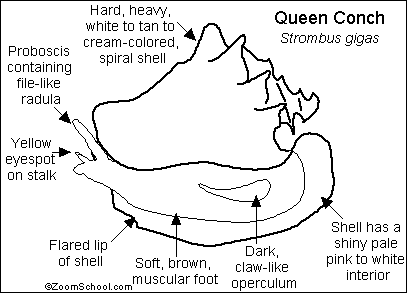 The Queen Conch or Pink Conch (Strombus gigas, named by Linnaeus in 1758) is a gastropod, a soft-bodied type of mollusk that is protected by a very hard shell. This invertebrate (animal without a backbone) is found in warm shallow waters in grassbeds of the Caribbean Sea.
Conchs are eaten by many animals, including rays and people. The beautiful shell is also collected by people; the shell is also used for jewelry and for conch trumpets. The Queen Conch is a relatively slow-growing animal.
The shell: The Queen Conch has a large, spiral shell often lined in pink. The conch's mantle, a thin layer of tissue located between the body and the shell, creates the shell. The conch builds the hard shell from calcium carbonate that it extracts from the seas. The shell is up to 1 foot (30 cm) long. The lip of the shell is flared and there are spines to deter its many predators.
Anatomy: The body is divided into the head, the visceral mass, and the foot (which is small). The conch has two pairs of tentacles on the head; it has a light-sensitive eyespot located on each of the larger tentacles. The smaller pair of tentacles is used for the sense of smell and the sense of touch. The small operculum (which is like a trap door) is located on the foot and looks a bit like (and works like) a claw. Young conchs can bury themselves in the sand when they are in danger.
Diet: Conches eat grasses, algae, and floating organic debris. They eat using a radula, a rough tongue-like organ that has thousands of tiny denticles (tooth-like protrusions).
| Search the Enchanted Learning website for: |