
|
| You might also like: | Cape Buffalo Printout | Narwhal Printout Unlabeled | Snow Goose Printout | American Golden Plover Printout | Minke Whale Print-out | Today's featured page: Whale Extremes |
| All About Birds | EnchantedLearning.com Arctic Tern |
Animal Printouts Label Me! Printouts |
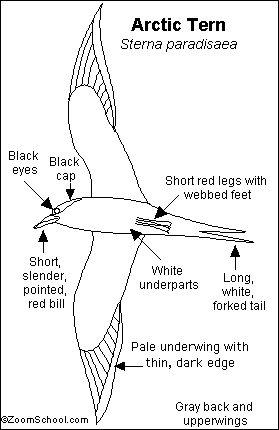 The Arctic tern (Sterna paradisaea) is a small bird that makes the longest migration of any bird. It breeds in the Arctic tundra (within the Arctic Circle), but flies to the edge of the Antarctic ice pack during the winter. It flies over 21,750 miles (35,000 km) each year - roughly the circumference of the Earth. This excellent flier spends most of its life flying. This tern always experiences long days, since it spends the summer in the Arctic and the (Northern Hemisphere) winter in the Antarctic.
These social birds live in large groups, called colonies. Immediately before beginning a migration, a noisy colony of birds suddenly becomes quiet, and they all take to the air and fly away (this behavior is called "dread").
Arctic terns have a life span of about 20 years.
Anatomy: The Arctic tern is about 12 to 15 inches (30-38 cm) long and weighs about 2.8-4 ounces (80-110 grams). Males and females are similar. The Arctic tern has webbed feet, the tail is long and forked, the legs are short and red, and the head is rounded and white with a black cap.
Diet: The Arctic tern eats mostly small fish, and to a lesser degree, small invertebrates, like insects, shrimp, and krill. The tern swoops down into the water to catch its prey.
Eggs and Nests: In Arctic breeding grounds, females lay 1-2 cream-colored eggs with brown speckled eggs (1.6 inches long) in each clutch (a set of eggs laid at one time). The eggs are laid in a grassy area. Both parents care for the eggs and feed the hatchlings.
| Search the Enchanted Learning website for: |