
|
| You might also like: | Cephalopod Printouts | Yellow Jacket Printout | Crustacean Printouts | Lobster Printout | Copepod Printout | Today's featured page: Match Letters to Pictures |
| EnchantedLearning.com | Animal Printouts Label Me! Printouts |
The Biggest Crabs: The biggest crab is the Japanese Spider crab (Macrocheira kaempferi), which lives on the floor of the north Pacific Ocean; it has a 12 ft (3.7 m) leg span. The biggest land crab is the Coconut crab (Birgus latro), which lives on islands in the Pacific Ocean; it has a leg span up to 2.5 ft (75 cm).
Diet: Many crabs are omnivores (plant- and meat-eaters), others are carnivores (meat-eaters), and some are herbivores (plant-eaters).
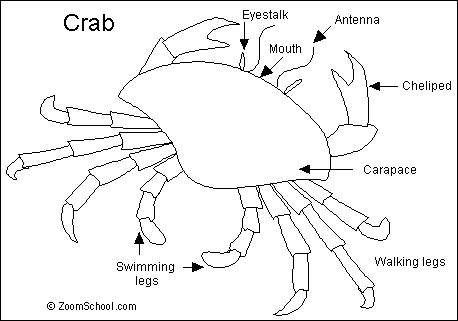
Anatomy: Crabs are invertebrates, animals without a backbone. They have an exoskeleton (also called a carapace), an outer shell that both protects them from predators and provides support. These crustaceans have ten jointed legs, two of which have large, grasping claws (called pincers or chelipeds). They have a flattened body, two feelers (antennae), and two eyes located at the ends of stalks.
Breathing: Marine crabs breathe underwater using gills, which are located in a two cavities under the carapace. True land crabs have enlarged, modified cavities that act like lungs so that the land crabs can breathe air.
| Search the Enchanted Learning website for: |