
|
| You might also like: | Anna's Hummingbird | White Dove (pigeon) Printout | Bird - Word Shape Puzzle | Oriole Printout | Ruby-throated Hummingbird Printout | Today's featured page: Timeline: US Constitution |
| All About Birds | EnchantedLearning.com Hummingbirds | Animal Printouts Label Me! Printouts |

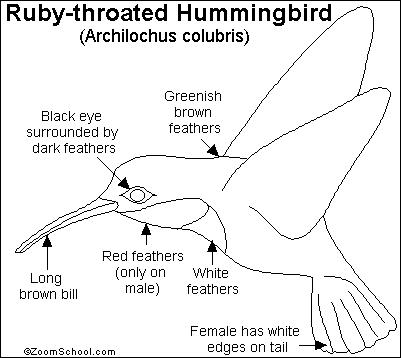
Anatomy: The biggest hummingbird is the Giant Hummingbird of South America; it weighs 20 grams. The smallest hummingbird (and also the smallest bird) is the Bee Hummingbird, which is about the size of a bee!
Most hummingbirds' feet and legs are so small that they cannot walk or even hop; hummingbirds mostly use their legs and feet for perching (but the toes and claws are very long, and are used for perching). Hummingbirds are almost helpless on the ground.
Diet: Hummingbirds sip sweet nectar from flowers and also eat some tiny bugs (including fruit flies) for protein. They use their long tongue to lap up nectar from flowers.
Nest and Eggs: Hummingbirds make their tiny nests from lichens, spider webs, and plant down (fluffy seed coverings).
Predators: Many animals prey upon hummingbirds, including many other birds, like orioles, roadrunners, hawks, and flycatchers. Hummingbirds can also die when they are caught in spider webs.
| Search the Enchanted Learning website for: |